Ganglion Cyst / Mucoid Cyst Surgery
This procedure completely excises ganglion and mucoid cysts that cause pain and discomfort in the foot and toes, eliminating their underlying causes to prevent recurrence.
Supervising Specialist
이동오 원장 (Dong-Oh Lee, M.D., Ph.D.) - Board-certified Orthopedic Surgeon | 이동오 원장 의료진 프로필 및 연구실적 보기
Key Symptoms
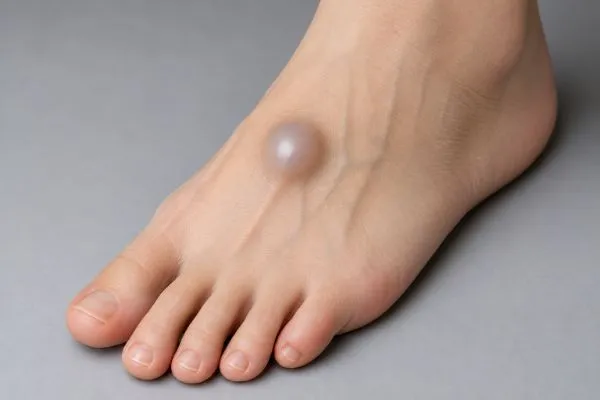
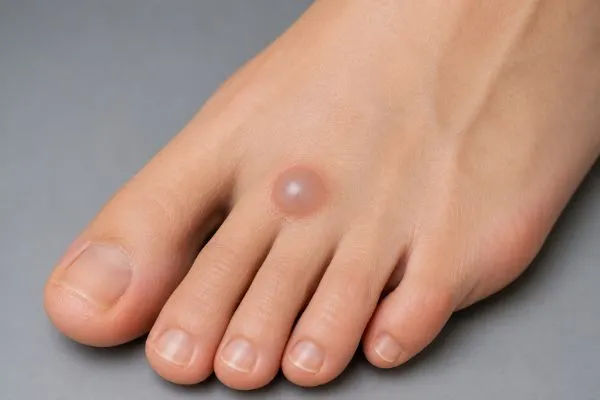
- A blister or lump-like mass is palpable on the dorsum of the foot or toe joints.
- Friction against shoes causes pain at the cyst site.
- The size of the cyst fluctuates or progressively enlarges.
- Fluid reaccumulates shortly after syringe aspiration.
- There is a tingling or aching pain in the surrounding area.
Recommended For
- Ganglion Cyst - A benign tumor formed when viscous synovial fluid leaks from the joint capsule or tendon sheath, creating a sac (cyst). It predominantly occurs on the dorsum of the foot or around the ankle. It is mostly asymptomatic, but the cyst itself can cause pain, and it may compress surrounding tissues, leading to neurological symptoms or other discomfort.
- Mucoid Cyst - A condition where the bursa, which reduces friction around the joint, becomes inflamed and filled with fluid. Lumps usually form just proximal to the toenail and may repeatedly form and rupture. It causes discomfort or pain from irritation when wearing shoes, may exude discharge onto socks, and can be accompanied by infection.
Advantages
- Complete Excision Down to the Root (Surgical complete excision of the cyst sac (root) that cannot be resolved with aspiration., Minimization of recurrence rates by eliminating the underlying cause.)
- Correction of Associated Structural Bone Issues (Simultaneous trimming of protruding osteophytes (bone spurs) that cause mucoid cysts to eliminate the source of friction., Temporary fixation of the joint to promote structural stabilization if the toe joint itself is the primary cause.)
- Minimal Incision and Scar Minimization (Surgery with minimal incisions considering the anatomical characteristics of the foot., Minimization of postoperative scarring and rapid return to daily activities.)
Treatment Methods
- Ganglion / Mucoid Cyst Excision - A procedure performed under local anesthesia where a minimal skin incision is made, and the cyst is carefully dissected from its root to prevent the thin cyst wall from rupturing while avoiding surrounding nerves and blood vessels, achieving complete removal. If a protruding bone causes friction, the bone spur (osteophyte) is trimmed simultaneously.
- Temporary Interphalangeal Joint Fixation - If a structural deformity of the interphalangeal joint or the joint itself is the primary cause of the mucoid cyst, the procedure may be accompanied by temporary fixation of the joint using a pin after cyst removal to ensure stable joint stabilization.
Treatment Process
- Precision Diagnosis - Ultrasound and MRI are used to assess the size of the cyst, its connection to the joint (root), and its relationship with surrounding blood vessels and nerves. X-rays are used to identify any associated bone abnormalities.
- Cyst Dissection and Excision - After a skin incision, the cyst sac is meticulously dissected to prevent rupture. The origin (root) leaking from the joint capsule or tendon sheath is identified, ligated, and excised.
- Cause Correction (If Necessary) - Protruding bones (osteophytes) irritating the cyst are excised, or if there is severe toe deformity, the joint is properly aligned and secured with a pin.
- Suturing and Dressing - The surgical site is meticulously sutured and disinfected, followed by a compressive dressing to prevent hematoma formation and swelling.
Post-Care Precautions
- Initial Wound Care - Because the foot is an extremity with peripheral blood circulation, wound healing may be delayed. Care must be taken to prevent water from reaching the surgical site until the stitches are removed.
- Precautions for Shoe Selection - Roomy, soft shoes or prescribed specialized footwear must be worn to prevent pressure or friction on the surgical site.
- Precautions Before Pin Removal - If temporary interphalangeal joint fixation (pin fixation) was performed, special care must be taken not to apply excessive force or bump the toe to prevent pin displacement or infection. The pin is typically removed easily in the outpatient clinic after 2 to 4 weeks.
Side Effects & Risks
- Infection and Nerve Damage - Because many fine nerves pass through the dorsum of the foot and toes, temporary hypoesthesia or tingling may occur around the surgical site, and rarely, wound infection may develop.
자주 묻는 질문 (FAQ)
- Q. Can't the fluid just be drained with a syringe without surgery?
- A. Aspiration using a syringe is a simple procedure, but because the cyst sac itself remains, there is a high probability of fluid reaccumulation within days or weeks. If it recurs multiple times or causes discomfort due to its large size, surgical excision is the most definitive method.
- Q. Is there a risk of recurrence after surgery?
- A. Complete excision down to the root significantly reduces the recurrence rate. However, due to the nature of ganglion cysts, if there are constitutional factors such as a weakened joint capsule or continuous irritation, the possibility of recurrence in the same or a different area remains. Temporary fixation is performed to avoid recurrence as much as possible.
Why Choose Us
- Root Excision Expertise to Prevent Recurrence - Beyond just removing the visible lump, we possess the expertise gained through extensive experience to locate and suture the microscopic gaps (roots) where synovial fluid leaks.
- Comprehensive Treatment Considering Structural Causes - Beyond simple tumor excision, from the perspective of foot and ankle specialists, we identify and simultaneously resolve the structural issues of the bones and joints causing the cysts.
- Simultaneous Consideration of Foot Function and Aesthetics - We enhance postoperative aesthetic satisfaction through scar-minimizing incision line design and meticulous suturing.
참고문헌 및 출처
Blume PA, Moore JC, Novicki DC. Digital mucoid cyst excision by using the bilobed flap technique and arthroplastic resection. J Foot Ankle Surg. 2005 Jan-Feb;44(1):44-8. doi: 10.1053/j.jfas.2004.11.009. PMID: 15704082.
Alsahhaf A, Renno W. Ganglion Cyst at the Proximal Tibiofibular Joint in a Patient with Painless Foot Drop. Pain Physician. 2016 Nov-Dec;19(8):E1147-E1160. PMID: 27906945.